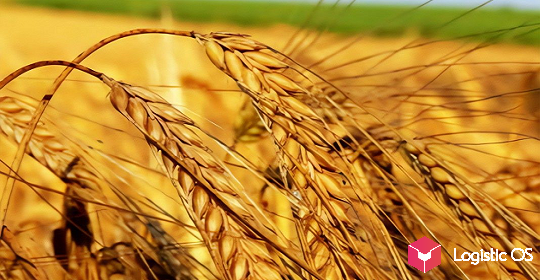
This country is actively increasing its food self-sufficiency by increasing its domestic production.
Egypt has traditionally been one of the world’s largest wheat importers, experts note. However, its dependence on imports is gradually decreasing, as the government is actively implementing plans to strengthen its domestic production.
For example, the country is currently preparing for the 2026 harvest. Experts predict that this season will be the second-largest harvest on record.
This is reportedly due to the government’s ambitious program to increase food self-sufficiency.
More importantly, it is supported by significant financial incentives and support measures for farmers. This is why its results are becoming increasingly tangible.
As for the future harvest, Egypt’s wheat harvest this season could approach 9.8 million tons. This is significantly higher than last year’s result, which was 9.2 million tons, analysts note.
This result was primarily due to the government raising state procurement prices, at which every producer of this crop can sell their wheat at any time.
It is emphasized that this has significantly increased the attractiveness of wheat to farmers. As a result, the area under this crop has expanded by approximately 170,000 hectares this season, bringing the total to 1.5 million hectares.
Furthermore, the Egyptian government is actively implementing a range of measures aimed at making wheat production more profitable in both the short and long term.
Among these measures is the introduction of modern irrigation methods that reduce water consumption. In Egypt, water is a valuable resource, and experts note that every additional liter used significantly increases the cost of production.
The government is also simplifying agricultural producers’ access to fertilizers and mechanization services. This allows them to develop their technologies, thereby increasing wheat yields per hectare. Furthermore, Egypt places great emphasis on breeding to develop seeds that are best adapted to local conditions.
At the same time, new grain storage facilities are being built and the associated infrastructure is being modernized.
It is expected that if Egypt continues on its chosen trajectory, its dependence on food imports could significantly decrease in the foreseeable future.