According to the latest data, agricultural trade between the countries of these associations reached $27 billion between 2019 and 2024.
Over the past five years, mutual trade between the two associations has demonstrated impressive growth: experts note that it has effectively doubled.
Meat and dairy products, fish and shellfish, and grains dominate the export structure.
Key importers include China, the UAE, Egypt, Indonesia, Iran, Ethiopia, South Africa, and several other countries.
Furthermore, such cooperation offers even more promising prospects.
At the meeting of the Board of the Eurasian Economic Commission held on May 19, an important document was adopted – a recommendation to deepen trade and economic ties between the countries of the Eurasian Economic Union and the BRICS states in the food and agricultural sectors.
It is emphasized that this is not only about increasing export flows, but also about introducing advanced digital solutions into the agro-industrial complex.
Therefore, exporting countries will be able to achieve even more impressive harvests through the use of modern technologies, which directly impacts the food security of all EAEU and BRICS countries.
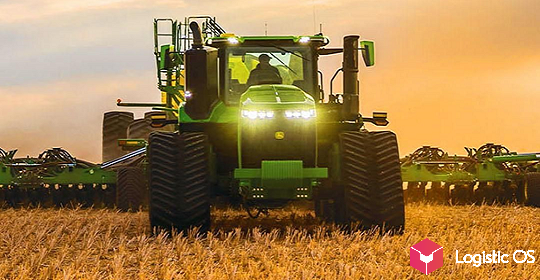
Specifically, the Union member states received recommendations to assist farmers in the implementation of digital technologies, the use of unmanned ground and aerial systems, precision farming methods, artificial intelligence, and geographic information platforms.
Also among the priorities are the creation of digital weather forecasting services and the development of risk assessment systems in agriculture.
All of this could become a crucial factor determining the development of agriculture in the coming years and even decades.
Overall, analysts believe that strengthening cooperation with BRICS opens up access to the world’s largest food markets for EAEU countries, as the BRICS group comprises countries whose populations account for more than half of the world’s population.
At the same time, digitalization of agriculture is seen as a key factor in increasing yields, reducing costs, and enhancing the agricultural sector’s resilience in the face of climate change and global competition.
Therefore, it is safe to say that the adopted recommendation has long-term strategic significance for all participants in the integration process and could have a significant impact on the development of global agricultural production and marketing markets.