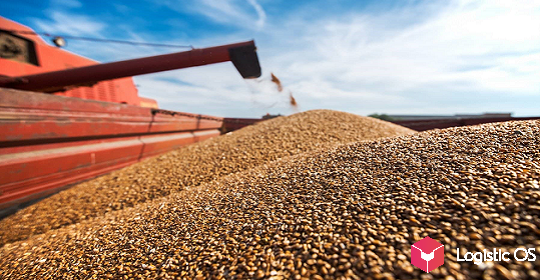
The domestic agro-industrial complex is entering the most active and economically significant phase of the agricultural year—the mass harvest.
During the large-scale industry forum «All-Russian Field Day 2026,» Minister of Agriculture Oksana Lut announced the key operational parameters of the ongoing harvest and preliminary projections for the gross harvest.
According to the ministry’s estimates, despite extreme weather anomalies in a number of production macroregions, the agricultural sector maintains very strong physical potential for harvesting key crops.
Logistics of the Delay: Why the Center is «Flooded» and Siberia is «Burning»
The main challenge of the harvest season that has just begun is the unprecedented climate polarity, which has disrupted traditional fieldwork schedules and led to a general delay in the harvest.
To date, the grain harvest in Russia has already surpassed the 21 million ton mark.
However, in terms of area, the lag in grain crops exceeds 2.5 million hectares compared to last year’s figures. The key reason for this shift was prolonged rains, which first delayed spring sowing and are now blocking equipment from entering the fields.
Twenty-five key regions of the country have already entered the active harvest phase, but the geography of the harvest shows stark contrasts:
Central Russia and the Volga region.
Excessive soil moisture is being recorded in this macroregion. The central regions, as well as Tatarstan and the Urals, are literally «flooded» with heavy rainfall, preventing combines from operating at full capacity.
Southern Russia.
This region is the main beneficiary of the season. Abundant spring and summer rains ensured excellent vegetation, and the southern regions should make the most of their harvest, compensating for overall losses.
Siberia.
The region is experiencing a severe drought. In the Altai Krai, the region’s key breadbasket, critical heat has persisted for more than two months without a single rainfall.
Crop growth is in poor condition, which will inevitably lead to a drop in harvests beyond the Urals.
Revised Forecasts: Historic Shrinkage of the Spring Wedge
Independent expert Alexander Korbut emphasizes that the accumulated potential allows for a final gross grain harvest of 139-140 million tons (including new territories), which fully covers domestic needs and export quotas.
The sunflower forecast also remains optimistic, provided the weather stabilizes in August.
Nevertheless, leading analytical agencies have begun systematically reducing their May estimates.
ProZerno lowered its grain harvest forecast by 2.7 million tons to 134.7 million tons (excluding new regions), a 4.6% decrease from last year. By crop, experts expect:
Wheat – a decline to 86.85 million tons (from 91 million tons previously);
Barley – a decline to 19.2 million tons;
Corn – a moderate increase to 15.7 million tons.
SovEcon analysts, meanwhile, adjusted their wheat harvest to 88.9 million tons. This change is due to an overall reduction in wheat acreage to 25.8 million hectares, the lowest in 12 years.
Spring wheat suffered the brunt of the decline, shrinking to a multi-decade low of 9.9 million hectares, amid a stable 15.9 million hectares of winter crops.
Conclusions for strategic planning
In addition to the climate factor, analysts cite the smooth flow of logistics, specifically the uninterrupted supply of fuel to harvest crews during peak weeks, as a key trigger for the successful completion of the harvest.
Weather delays compress the harvesting period, creating the risk of critically increasing loads on elevators.
The delay in the arrival of new grain in the center creates a short-term price vacuum, which will be offset by strong pressure from southern port regions.