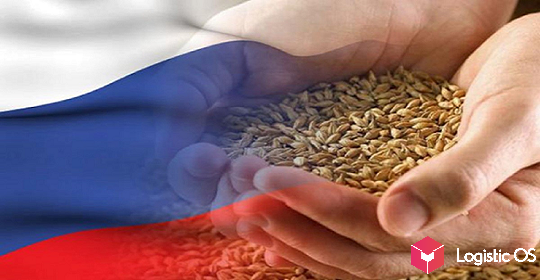
The Russian grain sector is facing a protracted economic crisis, threatening the financial stability of producers and the upcoming sowing campaign.
Amid the arrival of the new harvest, purchase prices in the southern regions have fallen to the cost of production, and in some farms, even below it.
In this reality, the professional community of southern Russia has issued a consolidated demand to the government to immediately abolish the grain export duty.
The regulatory mechanism created to protect the domestic market has, under current conditions, become a barrier, exacerbating losses for crop growers.
The Inertia of Restrictions: Why the Duty is Dragging the Market
The current damping mechanism has deprived the domestic market of flexibility and the ability to recover from the decline in global prices.
The duty has created a rigid artificial ceiling: any hint of price growth is curtailed by the state, and the remaining margin is taken by traders and port terminal owners.
The economic results for farmers after the five-and-a-half years of the duty’s implementation look disappointing:
Real incomes have fallen—the average selling price of grain has dropped by approximately 20%;
Costs have increased—the cost of production has jumped 1.5-2.5 times due to the increased cost of equipment, fuel, and seeds;
The strategy of holding back harvests is not working—the accumulated financial overhang of expenses no longer allows for the current losses to be offset.
Experts point to a fiscal paradox: with the annual budget revenue target from the duty of 137 billion rubles, the state has only managed to collect approximately 8.7 billion rubles.
Purchase prices at ports have fallen significantly below the level at which the duty is effectively assessed.
Canceling the duty will not trigger a price hike within the country, but will provide producers with the necessary psychological and economic incentive to stay in business.
Triple Deadlock: Surplus, Logistics, and the Threat of Shortage
The current crisis in the South is caused by the confluence of three factors: severe restrictions on export logistics, overcrowded domestic berths, and falling external demand.
The situation is exacerbated by port force majeure: due to regular attacks on ships and berths, Russia’s export potential risks being shorted by 30-35 million tons of wheat this season (approximately 15% of global trade).
If the attacks continue, FOB prices could soar above $400 per ton, but Russian farmers will not feel the impact—domestically, grain prices will continue to fall under the pressure of excess volumes.
Financial exhaustion has already forced agricultural enterprises to sharply reduce investment.
Without prompt intervention, the crisis will trigger tectonic structural changes in the agricultural sector. Small farmers will begin selling off their assets en masse.
Large holdings and independent players, deprived of their own deep processing and port facilities, are freezing land acquisition deals.
A Comprehensive Shield Instead of Half-Measures
Industry experts acknowledge that simply lifting the duty will not be a panacea. A comprehensive set of government support measures is needed to stabilize the market:
Purchase interventions—the state’s emergency withdrawal of several million tons of grain into an intervention fund will help establish fair prices and provide farms with working capital before the fall sowing season.
Credit protection—maintaining unconditional access to preferential working capital and investment lending.
Fieldwork financing—simplifying and improving mechanisms for delivering subsidies for the seasonal harvest.
The southern grain sector is at a critical point. Without the immediate abolition of export duties and the launch of interventions, the industry risks entering a state of protracted stagnation, which will result in a reduction in cultivated area and technological regression in the long term.