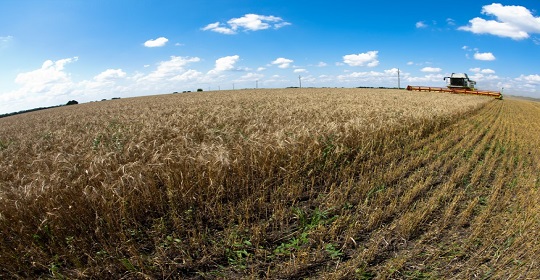
The current state of Russia’s agricultural machinery fleet demonstrates an alarming trend: despite the enormous volume of work, the pace of production modernization is rapidly declining.
According to the Ministry of Agriculture, approximately 426,000 tractors, 125,000 grain harvesters, and over 15,000 forage harvesters are currently in use in Russian fields.
However, the load on these machines is steadily increasing, as the rate of new acquisitions is declining.
The main barrier to upgrading the equipment base is the severe price disparity. The cost of specialized machinery and equipment is increasing much faster than agricultural producers’ income from finished product sales.
Investment Vacuum and Falling Profitability
Experts agree that the key problem in the market lies not in the price tag of the equipment itself, but in the catastrophic shortage of available working capital among farmers.
Operating margins are sharply declining. A drop in business profitability of just a few percent immediately triggers a contraction in the agricultural machinery market.
Over the past three to four years, it has already lost 50-60% of its peak, and a further 10-15% decline in sales is predicted for this year.
The situation is exacerbated by general uncertainty. Agricultural enterprises are squeezed between regulatory mechanisms for export policy and record-high interest rates on commercial loans.
Machine-building plants require consumers to plan long-term for years to come, while farmers themselves lack confidence even in the short term.
Demand for machinery in the agricultural sector has effectively shifted to the «deferred» category.
Government Support Measures and Barriers for Small Businesses
This year, the government allocated over 33 billion rubles to stimulate agricultural machinery sales.
Of this amount, approximately 15 billion rubles are distributed through Rosagroleasing’s preferential programs, a similar amount is contributed by regional budgets, and 2.4 billion rubles are allocated to subsidize loan interest rates.
The Ministry of Agriculture highlights the transition to gas-powered vehicles, which are eligible for special discounts of up to 35% and preferential leasing, as a promising area.
Nevertheless, representatives of small businesses point to systemic imbalances in the distribution of support.
The strict linkage of direct subsidies to the register of Russian industrial products has limited the opportunities for peasant farms (PFs) compared to traditional leasing.
Industry associations are calling for a level playing field and the same rules for receiving state subsidies for all market participants, regardless of the scale of their business.
Crisis in the Machine-Building Industry
The flip side of the problem is the critical financial and economic situation of the specialized equipment manufacturers themselves.
Manufacturing companies are facing a decline in business activity among their main customers, price controls, and pressure from imports.
Domestic machine builders are asking the government to launch new support mechanisms, including direct subsidies for the production of critical components and spare parts, as well as grant programs for localizing production.
Without a comprehensive solution to these systemic contradictions, the investment pause in the Russian agricultural sector will prolong.