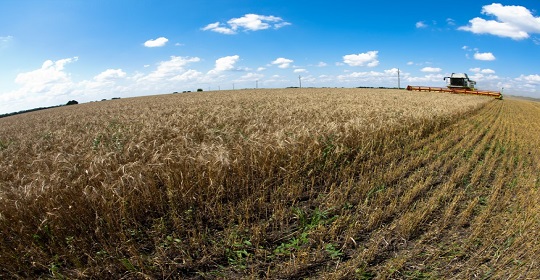
A sharp decline in entrepreneurial activity has been recorded in the domestic crop production sector.
According to data from analytics services, the number of new business registrations in the grain-growing sector plummeted by 34.6% year-on-year between January and August, totaling just 2,400 new organizations and individual entrepreneurs.
This downturn was the steepest among key crop production categories. Across the sector as a whole, the number of new market entrants fell by 26.8% year-on-year, dropping to 5,800 entities.
The total number of specialized farms is also showing a downward trend: by September, the number of grain-growing enterprises had decreased by 1.9% (to 74,200 companies), while the number of crop-producing businesses overall fell by 1% (to 124,500 entities).
Economic Squeeze: Falling Profitability and High Barriers to Entry
Analysts studying the internal economics of the agro-industrial complex point to a combination of key macroeconomic factors that have triggered this capital outflow.
The primary driver of this negative trend has been a prolonged profitability crisis.
By the beginning of this year, average profitability in crop production had fallen to a critical level of 11.8–11.9%, whereas just two years ago, the figure stood in a comfortable range of 21% to 28%.
Currently, approximately 40% of industry players are operating at a loss.
The situation is significantly exacerbated by the fact that agricultural businesses require massive initial investments in land and machinery. Amid rising production costs, low domestic prices, and export logistics constraints caused by the closure of ports in the Azov-Black Sea basin, achieving a return on new investments is becoming virtually impossible.
Market Transformation: Asset Consolidation and State Intervention
Current market conditions are inevitably driving a radical restructuring of the domestic agro-industrial complex.
Small farms are unable to withstand the financial pressure and are exiting the market en masse, either going bankrupt or selling off their assets.
It is primarily large agricultural holdings that manage to survive, thanks to economies of scale.
Major players have the capacity to optimize supply chains, procure inputs efficiently, secure financing, and utilize their own grain storage facilities to weather the low-price period without having to sell their harvest immediately after reaping.
A rise in produce prices is essential to stabilize the sector.
As an immediate support measure, the state plans to purchase grain from Russian farmers for the national reserve.
This initiative aims to support producers by offering fair prices, thereby providing farms with the working capital needed for future planting campaigns.