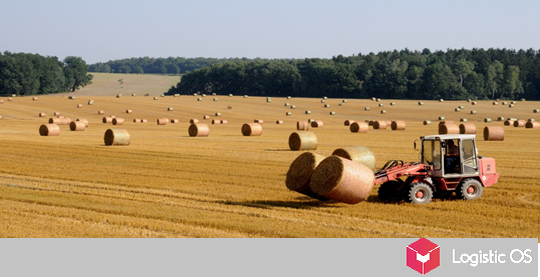
The domestic agro-industrial complex has completed the phase of quantitatively saturating the market with basic food products and is now shifting its development strategy toward achieving full independence in key, knowledge-intensive sectors.
Global Expansion and Key Crop Production Indicators
Over the past two decades, the national agricultural sector has experienced a phenomenal leap, transforming from a major importer of staple food products into a key player in the global market.
The total value of food and raw material exports has increased approximately 30-fold, surpassing $41.6 billion in recent trading periods.
The foundation for this breakthrough has been consistently high crop yields, which have reliably exceeded the 100-million-ton mark.
A historic high for grain harvests—measured in net weight—reached 142 million tons, firmly establishing the country as a global leader in the supply of high-quality milling wheat to markets in the Middle East and Asia.
Production Records in Livestock and the Dairy Industry
Alongside crop production, related sectors—such as food processing and livestock farming—are also showing rapid growth. Total meat production (in carcass weight) has remained stable at around 12 million tons, with the poultry sector hitting an all-time high of over 7.3 million tons.
This has not only fully met domestic demand but has also enabled an increase in exports of meat products and offal, with annual export growth exceeding 25 percent. A positive trend has also emerged in the dairy sector, with total milk yields approaching 34.2 million tonnes. The industry is gradually overcoming a long period of stagnation, as businesses shift their focus toward the production of complex, high-value-added dairy products, such as cheeses and premium-grade butter.
Overcoming Dependence in Breeding and Genetics
The primary challenge for the long-term sustainability of the agro-industrial complex remains import substitution in the field of biotechnology. Achieving formal self-sufficiency in grain (over 95%) and meat (over 85%) does not guarantee security without a robust, homegrown fundamental scientific base.
In recent years, a turning point has been reached: the share of domestically bred seeds used in fields has risen to 70%, while the availability of pedigree breeding stock for cattle in the dairy sector has reached 80%.
Targeted programs have set a firm medium-term objective: to ensure that Russian-bred varieties of major agricultural crops account for at least 75% of the market. This will fully insulate domestic production from external price shocks and sanctions-related pressure.
Localization of Components and the Adoption of Digital Technologies
Large-scale modernization is underway within the food ingredients and veterinary sectors. Significant industrial capacity for the production of citric acid is being developed, and the output of domestic animal vaccines has increased nearly 1.7-fold.
Engineers and biologists are successfully localizing critical components, including frozen starter cultures for dairy processing plants and feed enzymes.
At the same time, elements of artificial intelligence and autonomous systems are being integrated into precision farming practices. The use of agricultural drones and automated systems enables farms to reduce operational costs—specifically those related to the purchase of fertilizers, scarce fuel, and crop protection products—by an average of 20%, thereby laying the foundation for a new technological paradigm in rural areas.