Major retail chains are keeping the cost of a basket of essential goods in check, thanks to the arrival of new harvests and by selling products at prices below their own acquisition costs.
Annual deflation in the «entry-level price» segment
As of the end of October, the minimum retail prices for essential food items in Russia’s major retail chains had fallen by 1.7% year-on-year.
According to data from the analytical center of a leading retail trade association, the average retail markup for items in the «entry-level price» segment has dipped into negative territory—reaching -0.9%, compared to a positive 4.1% in October of last year.
Over the past 12 months, prices have dropped across 11 out of 25 basic food categories. Leading the year-on-year decline were pork (-20%), rice (-18%), and butter (-17%).
Significant price drops were also seen for millet (-10.5%), wheat flour (-10.3%), and seasonal apples (-8.6%). Other items that became cheaper include rye bread (-4.8%), sunflower oil (-4.7%), chicken eggs (-3.3%), wheat bread (-2.1%), and lamb (-1.6%).
October adjustment and the impact of the new harvest
On a month-on-month basis—compared to September—the cost of a basket of «entry-level price» food products in stores decreased by 0.7%. The primary drivers of this decline were seasonal apples, which saw an 18% drop in price, as well as sugar and sunflower oil, both of which became 10% cheaper. The arrival of the new harvest on store shelves has led to a price drop for vegetables used in traditional Russian soups (the «borscht basket»): onions have become 4.9% cheaper, carrots 4.3% cheaper, and white cabbage 1.6% cheaper.
Other product categories have also seen price trends favorable to consumers: pork prices fell by 3.5%, wheat bread by 2.5%, black tea by 1.8%, and milk by 1.5%.
A slight decrease—within the 1% range—was recorded for frozen fish (down 0.9%), millet (down 0.8%), flour (down 0.3%), and beef (down 0.2%).
Selling below cost as a tool to sustain demand
To stabilize consumer prices, retailers are actively employing a strategy of selling staple goods with a negative markup—effectively pricing them below their procurement cost. In October, 15 out of 25 «socially significant» food items were sold using this approach.
The deepest subsidies provided by retail chains were applied to white cabbage (down 14.8%), buckwheat (down 11.1%), carrots (down 10.9%), and millet (down 10.3%). Other items sold to consumers below their purchase cost included chicken eggs (down 9.5%), sunflower oil (down 6.4%), table beets (down 5.6%), and lamb (down 4.1%). The list of items with negative margins includes broiler chicken carcasses and rice (at -2.9% each), milk (-2.7%), wheat flour (-2.6%), pork (-2.2%), wheat bread (-2%), and vermicelli (-0.6%).
Inflationary backdrop and November trends
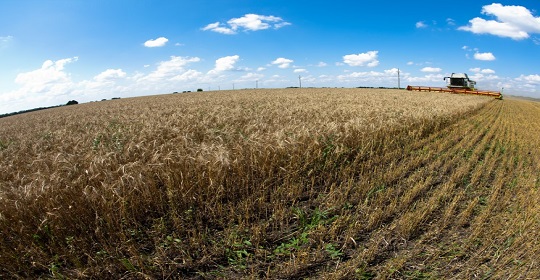
Retail market experts attribute the October decline in the cost of a food basket to the arrival of fresh harvests on store shelves, which increased the supply of vegetables, fruits, and pantry staples.
However, weekly monitoring data from the relevant ministry for the period of November 3–9 point to a gradual shift in this seasonal trend. Overall weekly inflation reached 0.12%, with the food segment rising by 0.34%—driven primarily by a 1.6% increase in the price of fruits and vegetables.
That said, the rate of price increases for potatoes and tomatoes slowed to 0.1% and 3.7%, respectively, while fruits (-0.3%) and sugar (-0.9%) continued to see price declines.
Furthermore, the ministry has noted a slowdown in price growth for eggs (to 1%), buckwheat (to 0.5%), pork (to 0.3%), and flour (to 0.2%).