The closure of southern ports, a strong harvest in Africa, and restrictions on substandard grain are shrinking export markets for Russian producers of durum wheat.
A sharp contraction in shipments following an all-time high
Russian exports of durum wheat could face an unprecedented decline in the 2026/27 season, dropping 3.6-fold to a modest 200,000 tonnes.
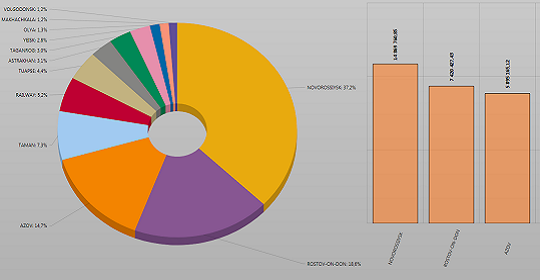
According to current estimates from experts at an industry association of pasta manufacturers, the export of this raw material has come to a near-complete standstill in the current agricultural year due to logistical constraints and the closure of ports in the Azov-Black Sea basin.
This interrupts a long-standing trend of continuous growth in shipments, which began in the 2022/23 season at a volume of 554,000 tonnes. Even after the European Union imposed a prohibitive tariff of 148 euros per tonne in July 2024, Russian exporters had managed to successfully redirect their trade flows.
In the previous marketing year, shipments reached an all-time record of 723,800 tonnes, driven by robust purchasing from Turkey (accounting for approximately 52% of the volume) and Tunisia (about 33%), as well as shipments to Kazakhstan and Algeria.
Rising domestic harvests in North African nations
Beyond the challenges involving maritime logistics in southern Russia, market conditions are also being pressured by a fundamental shift in global demand.
For the third consecutive year, North African countries have reduced their external purchases of durum wheat, as their own domestic harvests have increased. In Algeria, the harvest is set to increase from 2.4 million to 3.2 million tonnes this season; in Morocco, yields are expected to double from 1 million to 2 million tonnes (up from 0.7 million tonnes two years ago); and in Tunisia, production will reach 1.3 million tonnes.
Nevertheless, analysts emphasize that the African region remains a high-risk agricultural zone, heavily dependent on weather anomalies, meaning it cannot entirely dispense with imports.
Looking ahead, Morocco’s premium market could represent a promising growth opportunity for Russia—provided that Russian agricultural producers can ensure consistent grain quality and successfully displace traditional suppliers from Canada.
A Dead End for Substandard Grain in the Urals
A separate, pressing challenge for Russian crop producers is the difficulty in selling substandard durum wheat—grain that does not meet the requirements for high-quality pasta production.
The situation is particularly acute in the Orenburg and Chelyabinsk regions, which together account for half of Russia’s total durum harvest. Due to prolonged rains over the last few seasons, up to 80% of the crop in these regions has fallen into the «substandard» category.
Previously, this grain was purchased in bulk by Kazakhstan, where it was processed into feed-grade flour and subsequently re-exported to China. However, last spring, China blocked imports of such flour, citing concerns over phytosanitary standards, and direct shipments from Russia are also currently prohibited.
Under these circumstances, the only viable option for agricultural enterprises is to blend sound, albeit substandard, durum wheat into export shipments of soft wheat—with the buyer’s consent—to boost the protein content.
Domestic Surplus and the Geography of Russian Production
Despite foreign trade barriers, Russia’s domestic market has consistently maintained a surplus of raw materials since 2022.
The gross harvest of durum wheat has shown steady growth: from 1.5 million tonnes in 2022 and 1.55 million tonnes in 2023, it reached 2 million tonnes in 2024, with a record-breaking 2.1 million tonnes projected for 2025.
Approximately 90% of the country’s total harvest is traditionally derived from spring-sown crops. In addition to the Southern Urals, key production hubs include the Altai region, the southern regions of Russia, as well as the Samara, Saratov, and Ulyanovsk Oblasts.
For the current agricultural year, analysts anticipate a slight downward adjustment in production to 1.7 million tonnes; given the constrained export channels, this could exert additional pressure on domestic purchase prices.