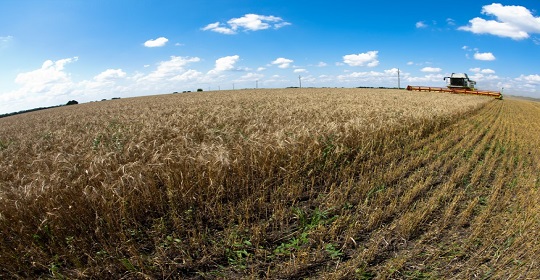
According to the latest data, the total grain harvest in the country has currently exceeded 145 million tons.
Statistics indicate that this year’s grain harvest in Russia will be one of the largest in recent years.
Deputy Prime Minister Dmitry Patrushev shared these figures. He estimates that the net grain harvest in 2025 will be approximately 135 million tons, with wheat accounting for approximately 90 million tons of this.
Positive results are also expected for other crops. For example, the potato harvest should reach approximately 8 million tons. Record harvests are also expected for soybeans and rapeseed.
The harvesting campaign in Russia is currently almost complete, so precise results regarding harvested volumes will be available soon.
The Deputy Prime Minister noted that this season can be expected not only to have a large harvest but also to be highly productive, which is also an important factor for farmers.
«Throughout the season, despite extreme weather conditions, yields of key crops exceeded last year’s. This applies to grains and oilseeds, sugar beets, and potatoes,» Patrushev said.
He added that despite weather conditions, which are less than optimal in some regions and are delaying the harvest, overall the remaining acreage should be harvested with minimal losses.
At the same time, agricultural producers are already working to ensure equally good results next year. Specifically, winter crops for next year’s harvest have already been sown on an area of approximately 20 million hectares. This figure is in line with the forecast, Patrushev noted.
«A fully formed structure of sown acreage for next year must be approved by the Ministry of Agriculture by the end of December and sent to the regions.
This is not only the key to a balanced harvest but also a key step in preparing the industry for the new planting season,» he added.
The expert also noted that the most important key to ensuring the country’s food security today is the transition to domestically bred seeds.
This process has been actively underway in recent years, but for some crops, it is still far from complete. Furthermore, Russian farmers must be fully provided with both agricultural machinery and fuel.
Finally, the government plans to continue supporting farmers through various methods, including providing them with preferential loans and direct subsidies.