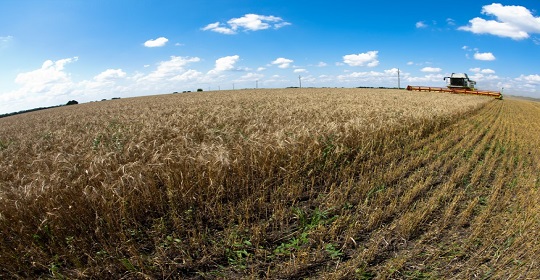
A good grain harvest in most exporting countries this season is creating problems for Russian grain supplies to the global market.
According to available data, many countries traditionally considered major wheat producers will have very substantial harvests in 2025.
For example, in Europe, the harvest was 144 million tons, 22 million tons more than in 2024.
Similarly, Argentina harvested 28 million tons of wheat, up from 19 million the previous year, while Australia’s harvest increased from 34 million tons to 37 million.
As a result, experts note, the export potential of the latter two countries increased by 8 million tons compared to last year. This could undoubtedly have a significant impact on the global grain market, analysts say.
At the same time, the major importing countries do not plan to increase demand. Each has its own wheat import program, and in most cases, it has already been fulfilled.
Moreover, these countries are expecting their own wheat harvests, which will further meet their wheat needs. Thus, the wheat market is currently becoming a buyer’s market, where the buyer dictates the terms.
This is already evident in grain importers beginning to seek better deals, while exporters are forced to lower prices to attract their attention.
For example, Bangladesh is currently purchasing grain from Argentina, as it is $7-8 per ton cheaper than Russian grain.
At the same time, many experts are confident that a significant increase in carryover grain stocks in Russia is inevitable. Even in the best-case scenario, if Russia manages to ship an additional 20 million tons of wheat abroad by mid-summer, carryover stocks will increase from 15 million to 18 million tons.
However, there is a serious risk that even this volume will not be shipped. Therefore, a drop in domestic prices is almost inevitable, as the increase in carryover stocks puts direct pressure on domestic prices.
Ultimately, these factors could create serious problems for Russian grain producers, experts note. Demand and prices for their products, as we see, risk falling sharply both domestically and internationally.
At the same time, farmers need money to pay off loans and prepare for the spring planting campaign.
For this reason, they will be forced to sell their harvest at any price—and such increased supply, in turn, risks further depressing grain prices.