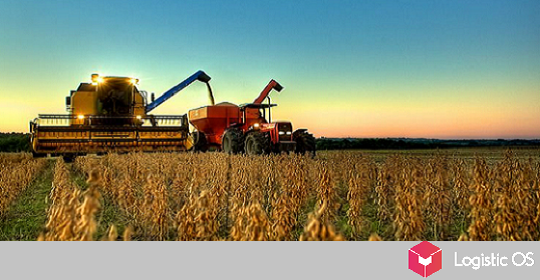
Experts note that domestic agricultural machinery production continues to show negative trends, with declines recorded across most equipment categories.
Statistics show that from January to March 2026, total agricultural machinery production by Russian companies fell by approximately 30%, amounting to 42 billion rubles.
Meanwhile, finished product sales fell by 16%, amounting to 32 billion rubles. Finally, agricultural machinery exports fell by 15%, amounting to 4.7 billion rubles.
This applies to virtually all categories of agricultural machinery produced by Russian companies. In particular, this applies to cultivators, harrows, and seeders. The only exception was combine harvesters, whose sales increased.
However, overall, experts are extremely concerned about the current situation. The decline we are witnessing is not new and is protracted, which raises even more concerns.
For example, shipments of finished agricultural machinery by manufacturers decreased by 18% in 2024, and by another 21% in 2025. Therefore, if this trend continues, production and sales volumes of machinery within Russia will fall to minimal levels in the foreseeable future.
This, in turn, could deal a serious blow to the Russian agricultural sector, as the availability of machinery is a prerequisite for farmers to maximize their harvests.
As for the causes of the current crisis, experts believe that one of the main factors currently affecting the market is the Central Bank’s strict policy.
High interest rates on loans have practically driven the industry into recession, as agricultural producers typically lack sufficient funds to purchase the necessary seeders and combines out of pocket.
And with the Central Bank’s high key interest rate, they are unable to obtain loans.
An additional problem is the current low prices for agricultural products on the global market. This means that companies in the agricultural sector have even less money to upgrade their agricultural machinery fleets.
At the same time, the Ministry of Agriculture notes that overall, plans to upgrade Russia’s agricultural machinery fleet are being implemented.
However, if the current situation does not normalize in the near future, it is clear that fleet renewal will slow down, and the load on existing equipment will increase, leading to accelerated wear and tear.