China continues to steadily increase its purchases of Russian agricultural products. In the first four months of this year, the total value of supplies reached approximately $3.5 billion.
According to experts, the physical volume of supplies exceeded 4 million tons. Overall, the increase in monetary terms was 46%, and in physical terms, 38%.
According to experts, progress is particularly noticeable in the pork product segment.
For example, as of mid-May, more than 44,600 tons had been shipped to China—a 57% increase compared to the previous year.
It should be noted that while last year’s supply structure was skewed toward fresh pork (17,600 tons versus 10,900 tons of by-products), the current balance is almost even: 23,000 tons of meat and 21,600 tons of by-products.
Thus, we see that this industry is gradually shifting from supplying raw materials to supplying more complex processed products with added value.
It should be noted that, in addition to pork exports, Russia is also actively exporting other agricultural products to China.
Frozen fish leads the way, accounting for 27% of all shipments. Moreover, the increase from January to April 2026 was nearly 80% compared to the same period last year.
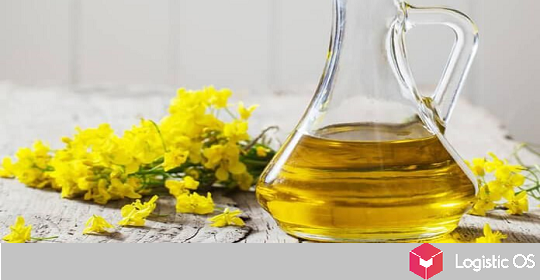
Furthermore, rapeseed oil, crustaceans, flaxseed, and soybeans play a significant role in the supply structure.
Recent data show that supply volumes for some items have increased exponentially. For example, flaxseed oil and wheat increased more than sixfold, while frozen fish increased 76-fold.
This suggests that the potential of the Chinese market for Russian exporters is far from exhausted, so further growth in volumes can be expected in the foreseeable future.
Moreover, it’s possible that new categories of Russian supplies to the Chinese market may emerge in the coming years.
In particular, terms for the supply of animal feed, finished meat and pork products, and several other categories of agricultural products are currently being agreed upon.
Furthermore, discussions are underway regarding opening the Chinese market to winter wheat and barley from 35 Russian regions. Bran, millet, sorghum, lentils, and chickpeas are also being developed.
Under favorable circumstances, supplies of these agricultural products could begin as soon as possible after the approval process is completed.
This suggests that Russian-Chinese trade cooperation in the agricultural sector has every chance of further deepening and diversifying.