The domestic agro-industrial complex is on the threshold of a large-scale digital reform, which is causing serious concern among key market players.
Starting September 1, 2026, the electronic consignment note (ECWL) is set to become the sole legitimate document confirming the legality of cargo movements.
However, businesses consider this step premature.
Eleven leading industry unions—including Soyuzmoloko, the Oil and Fat Union, and the National Union of Poultry Farmers—have sent an official petition to Prime Minister Mikhail Mishustin requesting a two-year postponement of the mandatory transition to electronic consignment notes (ECWL) until September 2028.
Risks to Logistics and the Threat of Shortages
The petitioners’ main argument is the critical unpreparedness of the technical infrastructure and the carriers themselves. Currently, the GIS EPD has a number of system vulnerabilities:
Lack of an emergency mode – if the system fails, it will be impossible to legally transport cargo.
Integration issues – the digital platform is still not fully synchronized with accounting and tax software.
Unstable connection – the lack of end-to-end internet coverage on regional highways blocks the ability to promptly verify documents.
For continuous supply chains in the agricultural sector, where perishable goods account for a significant share, any delays are fatal. A technical failure on the line can result in spoiled products, disrupted raw material delivery schedules to processing plants, and, as a result, stiff fines from retailers.
Experts warn that, in a worst-case scenario, this threatens localized food shortages in retail and a sharp increase in logistics costs.
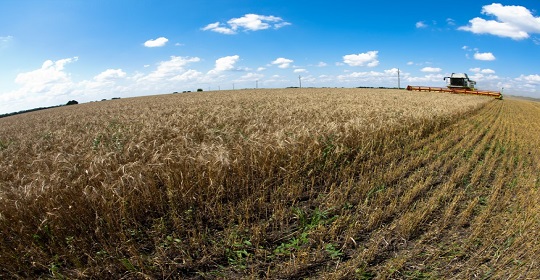
Of particular concern is that the start of the reform coincides with the harvest season, when the load on the transport system is at its highest.
The Government’s Position and Business Readiness
Despite the compelling arguments of farmers, regulators remain uncompromising.
The Ministry of Transport has already stated that a postponement is not being considered. Officials point out that businesses have had four years to voluntarily adapt processes—the system has been operational since September 2022.
The actual state of readiness within the sector itself remains uneven:
Market leaders—large holdings—are practically ready for the transition due to their high level of digitalization.
Small and medium-sized businesses—farms and small contractors—often lack even basic digital infrastructure.
Suppliers—even large processors—admit that working with the GIS EPD will be a completely new experience for them, and the percentage of third-party carriers ready to test the system is still critically low.
For companies operating in the agricultural sector, the coming months will be a period of rigorous stress testing.
Regardless of whether the unions succeed in securing a deferment, companies must urgently accelerate their connection to electronic document management (EDM) operators and audit their logistics counterparties’ IT systems to avoid being left without transportation during peak season.