Russian agricultural exports continue to strengthen their position in one of the most promising and capacious global markets.
A large-scale business mission of Russian agricultural exporters, organized by the Russian Ministry of Agriculture and the Federal Center «Agroexport,» has launched in Guangzhou.
Our country’s interests are represented by a significant delegation, including heads of relevant ministries, industry associations, and over 100 leading agricultural companies.
The key message of the event is clear: Russia is ready not only to increase supply volumes but also to fundamentally change its export structure by introducing new product lines.
Record Dynamics and Growth Drivers
Mutual trade statistics demonstrate exceptional growth rates, taking the partnership between the two countries to a fundamentally new level.
As Deputy Minister of Agriculture of the Russian Federation Maxim Borovoy emphasized, by the end of 2025, agricultural trade turnover increased by 21%, while net exports of Russian food products to China jumped by 20%.
The first five months of 2026 witnessed an unprecedented investment and trade boom, with Russian shipment volumes soaring by 42%.
The following categories demonstrated the strongest upward momentum:
Fish and seafood – consistently high demand for frozen fish and shellfish.
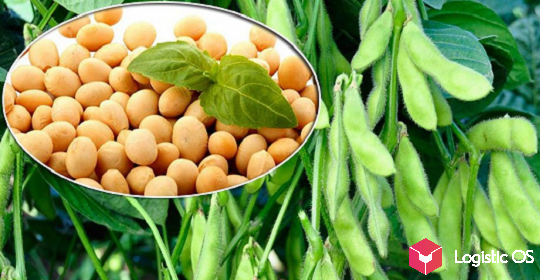
Oilseeds – significant increase in shipments of rapeseed and sunflower oils, as well as soybeans.
Meat and legumes – strong growth in sales of pork, offal, and peas.
A particular source of pride is maintaining our status as the main supplier of turkey to the Chinese market.
At the same time, exporters are successfully developing the niche of finished goods with high added value, offering Chinese consumers Russian confectionery, beverages, dairy, and meat products.
Market Opening and New Distribution Channels
The current success is the result of many years of systematic work by regulatory agencies. Since the official approval process began in 2018, Russian companies have received the right to import 30 types of regulated goods into China (including beef, poultry, milk, meal, and cake).
Further expansion requires a reformatting of distribution channels. The new strategy envisions the integration of Russian brands directly into Chinese retail chains and major national marketplaces.
The unique institution of agricultural attaché ensures the effectiveness of this work: China has become the only country in the world where the interests of the Russian Ministry of Agriculture are represented by four permanent diplomatic officers.
Evolution of Partnership: Technology and Personnel
The current business mission, the third in a row, goes beyond the traditional trade of buying and selling raw materials.
The 2026 program for the first time includes discussions on joint agricultural education, the transfer of advanced agricultural technologies, and the supply of Russian mineral fertilizers for Chinese farmers.
It is clear that China is transforming from a simple buyer of surplus grain and oil into a strategic partner for the creation of deep technological chains.
Russian holdings need to adapt their marketing and logistics to the strict standards of Chinese retail to secure their status as key food partners in China.