The domestic crop production sector is completing the current sowing campaign with tectonic structural changes that will determine the balance of the commodity market for the entire upcoming season.
According to the Ruseed analytical center, spring sowing in the country is almost complete, covering 51.5 million hectares (excluding new regions).
The main result of the 2026 campaign was the unprecedented expansion of oilseed crops, whose share in the overall crop structure soared to a record 27%.
This breakthrough is a natural result of the six-year evolution of the agricultural sector. Since 2020, the area under oilseeds has increased by almost 50% (or 7 million hectares), increasing from the previous 14.4 million hectares to the current 21.45 million hectares.
This dynamic guarantees a consistently high utilization rate for domestic processing plants and strong export potential for the oilseed sector.
Oilseed triad: sunflower and rapeseed at peak, soybeans bidden
Within the oilseed group, three basic crops hold the lead, but their growth rates have been mixed this year:
Sunflower is the main driver of growth.
Sunflower cultivation increased by 650,000 hectares compared to last year, reaching 11.7 million hectares.
If we take into account the potential of new regions (DPR, LPR, Zaporizhzhia, and Kherson Oblasts), the total sunflower area in the country exceeds 12.8 million hectares. The production flagships of the season were the Saratov (1.69 million hectares) and Orenburg (1.49 million hectares) Oblasts, as well as the Altai Krai (1.1 million hectares).
Rapeseed is strengthening its position.
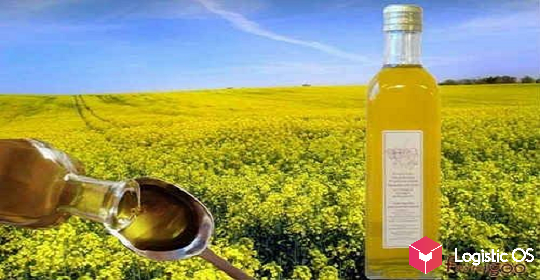
High margins, stable demand in foreign markets, and the introduction of new processing facilities have prompted farmers to expand rapeseed plantings by more than 517,000 hectares, reaching 2.95 million hectares.
More than half of all spring rapeseed is traditionally concentrated in Siberia, with the Novosibirsk and Omsk regions, as well as the Altai Krai, leading the way.
Soybeans are lagging behind.
Currently, 4.2 million hectares are sown with soybeans, 570,000 hectares less than last year.
Ruseed analysts emphasize that there is no cause for panic: the specific nature of soybeans allows for later sowing, so the final figures will likely be adjusted upward.
The bulk of the acreage is held by the Far East (Amur Region – 870,000 hectares) and the Central Black Earth Region.
Experts’ view: weekly market redistribution
The current field season confirms its status as one of the most dynamic in history. As Vladimir Petrichenko, CEO of the analytical company ProZerno, eloquently described the situation, the balance of power in the fields is changing, if not every day, then every week.
Due to vagaries of weather and market conditions, farmers quickly replanted their fields: as a result, soybeans were clearly undersown, while rapeseed and sunflowers received a significant surplus of seeding area.
Dmitry Rylko, head of the Institute of Agricultural Development and Crop Protection, also confirms that absolute records have been set for rapeseed and sunflowers.
Gross harvest forecasts look promising against the backdrop of the expansion of acreage.
According to IKAR estimates, the sunflower harvest could reach 19.7 million tons (compared to 16.9 million tons in 2025), although OleoScope experts are slightly more conservative, expecting a harvest of 18.687 million tons (a 7% year-on-year increase).
Across six key oilseed crops, analysts predict a combined harvest of around 35.1 million tons, a 3% increase from last season.
For the processing industry and exporters, a record-breaking oilseed harvest represents a strategic win. However, holding companies must consider the risk of localized declines in raw material prices during the mass harvest period and establish long-term contracts in advance to maintain high business profitability.