The domestic agricultural sector is showing localized adjustments to production indicators due to climate factors and structural changes in livestock farming.
According to the latest data from Rosstat, total agricultural production in current prices for the period January–June 2026 amounted to 2.76 trillion rubles.
This is 0.8% lower than the same period last year, when the industry grew by 1.1%.
The largest decline was recorded in June—a 2.9% decrease (to 711 billion rubles), largely due to the specifics of the current agricultural season.
Crop Production: High Yields with a Late Start
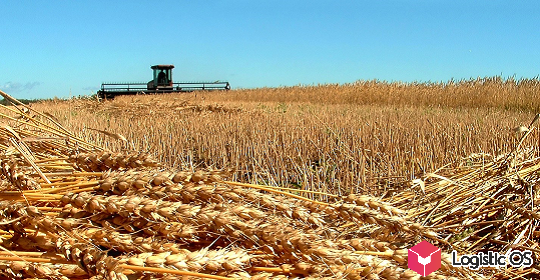
The main factor behind the June decline in crop production was the delay in the harvesting campaign.
In southern Russia, the start of harvesting was 7–14 days behind last year’s schedule.
As a result, by July 1, grain and legume crops had been threshed by agricultural enterprises on only 0.3 million hectares, a 51.7% decrease compared to last year.
Bunker grain harvest fell by 38.1% (to 1.3 million tons), while gross wheat harvest decreased by 66.4% (to 0.3 million tons).
However, the industry’s technological potential remains high.
The slowdown in harvesting is offset by quality indicators: the average grain yield increased by 9.8 centners per hectare and reached 44.6 centners per hectare.
Wheat also showed positive dynamics, reaching 37.8 centners per hectare, 4.7 centners per hectare higher than last year.
Livestock: Pig Farming Maintains Balance
The livestock sector is experiencing mixed dynamics.
Across all farm categories, livestock and poultry production for slaughter decreased by 0.5%, and milk production by 0.9%. At the same time, poultry farms and farms increased egg production by 1.4%.
If we consider only the segment of large agricultural organizations, livestock and poultry production increased by 0.3%.
Pig farming was the key driver, showing a strong growth of 4.3%.
This offset the decline in poultry (minus 2.7%) and cattle (minus 1.9%). In June, the cattle sector began to recover, increasing volumes by 4.1%.
Market Sales and Annual Targets
Despite the temporary decline in production rates, commercial activity among farmers increased significantly.
Sales of key products demonstrated double-digit growth in the first half of the year:
Grain sales increased by 27.7% (to 27.4 million tons)
Sunflower sales grew by 17.6% (to 3.7 million tons)
Milk sales increased by 2.6%, and egg sales by 4.8%.
According to adjusted forecasts from the Ministry of Agriculture and the Ministry of Economic Development, overall agricultural production is expected to decline by 1.4% for 2026 compared to 2025 levels.
Nevertheless, the industry maintains strategic stability: growth relative to the 2021 baseline will be approximately 11.5%, which is fully within the targets of the state agricultural development program.