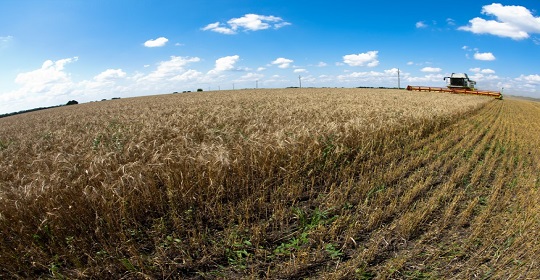
The Russian agro-industrial complex is entering a phase of active government regulation caused by temporary difficulties in export logistics.
The Russian Ministry of Agriculture is quickly developing a set of measures aimed at stabilizing the domestic grain market and maintaining the financial stability of domestic agricultural producers.
According to a statement by Minister of Agriculture Oksana Lut, made on the sidelines of the United Russia party congress, large-scale government procurement interventions could become one of the central mechanisms for regulating the market.
According to the ministry’s preliminary estimates, the total volume of grain purchases for the intervention fund this season could range from 1 to 3 million tons.
The ministry considers exceeding this threshold procedurally ineffective.
Relevant specialists at the ministry are currently conducting a detailed analysis and determining a list of specific regions where it would be appropriate to launch this mechanism.
However, government support will not be limited to interventions alone.
The Ministry of Agriculture’s leadership emphasizes that, in the current circumstances, subsidizing sold grain and extending short-term obligations could demonstrate even greater economic efficiency than directly removing surplus produce from the market.
In particular, the ministry is considering extending preferential loans taken out by farmers for autumn field work, which is especially relevant for Russian regions with the most challenging grain export situation.
Independent experts and financial sector analysts agree that the market requires a combined approach.
Extending loans will allow farms to quickly restore liquidity, avoid cash flow gaps, and prevent the risk of a wave of defaults. In turn, systemic procurement interventions will directly impact market price balances, effectively relieving pressure on domestic elevators.
At the same time, the Ministry of Agriculture has initiated a reform of the methodology for calculating minimum prices for procurement.
According to the new draft order, when calculating the intervention cost, it is planned to legally establish the guaranteed profitability of agricultural producers at 10%, as well as adjust the procedure for mandatory indexation of production costs.