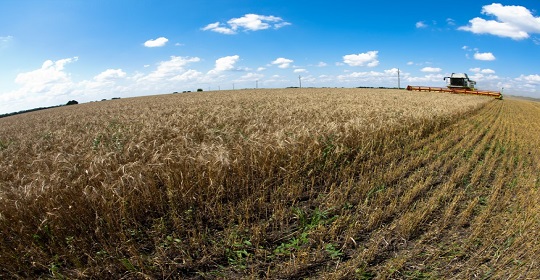
The Russian agro-industrial complex has faced a daunting challenge: a sharp increase in logistical problems at ports in the Azov-Black Sea basin has left a key export sector virtually blocked.
While global wheat prices are soaring to new heights, Russia’s domestic market is demonstrating the exact opposite trend.
Saturation of grain elevators amid the active harvesting campaign and the narrowing of export channels are rapidly pushing domestic prices down, threatening the profitability of crop production.
The response from the relevant ministry was immediate: authorities are considering radical steps to salvage farmers’ profit margins.
Tariff Maneuver: A Long-Awaited Moratorium
According to business sources, the Russian Ministry of Agriculture is carefully considering the introduction of a temporary moratorium on the flexible («floating») export duty for key grain crops—wheat, barley, and corn.
It is expected that the zero rate could be approved soon and will remain in effect until at least the end of 2026.
This step is critically important for the market right now.
The current dynamics of the fiscal burden have only exacerbated the situation: a planned rate recalculation resulted in the wheat duty increasing almost 1.4-fold, exceeding 1,000 rubles per ton.
With producer purchase prices in the south of the country falling by an average of 2,200 rubles per ton, and shipment rates in August falling to a 16-year low, eliminating duties is the most direct way to restore liquidity to exporters and prevent purchase prices from further declining.
Comprehensive Support Package
Tariff regulation is only part of the regulator’s larger plan. Minister of Agriculture Oksana Lut previously outlined the key tools being used to stabilize the situation in the affected regions:
Extension of preferential loans: a short-term measure to address cash flow gaps and prevent farm defaults, ensuring funding for ongoing autumn field work.
Direct subsidies: government payments for each ton of grain sold to directly compensate crop growers for losses.
Purchasing interventions: removing 1 to 3 million tons of «surplus» harvest from the market, which will help establish a fair price balance.
Expert forecast: preventive measures are needed for the entire sector
Industry experts agree that the zeroing of duties will have a powerful stabilizing effect. However, to fully restore farm economies, it would be advisable to extend the period of this measure until the end of the entire agricultural year—that is, until the summer of 2027.
The financial pressure on farmers will not ease in a couple of months.
Furthermore, analysts recommend that the authorities act proactively and extend the practice of zeroing duties to the oilseed sector (vegetable oils and oilseeds).
Logistics bottlenecks in the Black Sea region will inevitably affect this related industry.
Preemptively waiving export duties will allow the agricultural sector to avoid emergency operations and preserve the investment potential of Russian crop production in the long term.