Kazakhstan’s agro-industrial complex is reaching a qualitatively new level of export relations with its main strategic partner in Asia.
A joint digital platform for trading grains, oilseeds, and processed products was officially launched at the 8th China Grain Trade Conference.
The project, implemented with the active support of the Ministry of Agriculture of the Republic of Kazakhstan and JSC NC Food Contract Corporation, opens an unprecedented distribution channel for domestic agricultural producers.
The uniqueness of this step is underscored by the fact that Beijing, for the first time in history, has opened access to its closed national infrastructure to a foreign country, and Kazakhstan became the debut partner.
Infrastructure Scale and Operating Model
The platform is integrated into the National Online Grain Trading Platform of the People’s Republic of China. This colossal digital network unites approximately 50,000 Chinese agricultural enterprises.
The Grain Trade Coordination Center under the National Food and Strategic Reserves Administration of China (NAFRA) has been assigned the operator’s functions.
For Kazakhstani businesses, the main advantage of the new system will be the elimination of unnecessary intermediaries.
The tools enable direct B2B contracts to be concluded online.
The platform’s configuration supports a variety of trading sessions:
open auctions;
bids by closed invitations;
transactions by prior arrangement and fixed price.
Analysts emphasize that the key barrier to exporting to China—strict regulatory procedures and the risk of non-payment—is mitigated by integrated online settlement mechanisms, independent inspection (survey), guarantee mechanisms, and legal dispute resolution.
This minimizes transaction costs and makes pricing transparent.
Initial Results and Export Horizons
The effectiveness of the digital corridor has already been proven in practice. By the time of the full release, 35 Kazakhstani companies had been validated and registered on the platform.
Furthermore, a large contract for the supply of 24,000 tons of oilseed flax to China was signed within the system.
As a reminder, the official launch was preceded by a series of pilot shipments conducted in the spring, when a test batch of 200 tons (and later an additional 60 tons) successfully passed all logistics filters.
According to Nazgul Khatepova, Vice Minister of Agriculture of the Republic of Kazakhstan, the initial focus of trade is on grain and oilseed products, crude vegetable oil, and finished products from the domestic oil and fat cluster.
However, the capacity of the Chinese market and the flexibility of the platform suggest a gradual expansion of the product range.
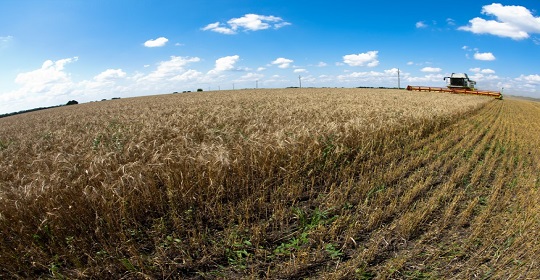
The platform’s launch coincided with the active harvest season in Kazakhstan.
Given the current economic situation—an oversupply of cheap wheat on the domestic market due to the influx of raw materials from Russia and the need to quickly manage export flows—the emergence of a direct, high-tech gateway to China could become a lifesaver for Kazakhstani farmers’ profitability.
Reducing dependence on traditional land-based intermediaries and protecting against price dumping will strengthen Kazakhstan’s position as a leading food hub in Central Asia.