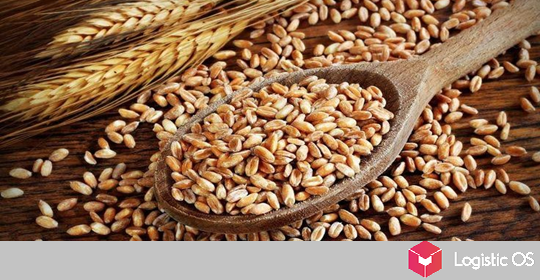
Positive signals from export markets and preparations for state procurement have helped wheat prices recover; however, global trends are tempering further growth.
A Regional Overview of Price Recovery
The domestic grain market is showing a solid recovery trend following a sharp decline observed in previous periods.
Domestic prices have risen steadily over the past few weeks, with the Volga region demonstrating the most pronounced growth. In this region, the price of a tonne of third-class wheat increased by 620 rubles, reaching 10,360 rubles.
Producers in the Southern and Siberian regions also saw significant gains, with prices per tonne adjusting to 9,580 rubles and 12,220 rubles, respectively. The Urals and the Black Earth (Chernozem) region experienced a more modest but stable increase of 100–200 rubles.
Fourth-class and feed-grade grain followed the same general trajectory, with the largest gains again recorded in the Volga region.
The only exception to this overall positive trend was the central part of the country, where prices for food-grade wheat remained unchanged, while lower-grade grain saw a slight decline in value.
The Impact of External Markets and Global Competition
The primary driver behind this strengthening has been an uptick in export shipments. The estimated value of domestic grain at deep-water Black Sea ports has risen to $210 per tonne, while at Baltic terminals, it has reached $270 per tonne.
Nevertheless, it is too early to expect the current high rate of domestic price increases to be sustained in the long term. The primary restraining factor is the state of the global market, where key foreign competitors from Europe and the United States have begun actively lowering their prices. For instance, the price of American wheat has fallen to $283 per tonne, while French wheat has dropped to $280 per tonne.
This downward pressure in global markets limits the potential for aggressive growth in the domestic market; consequently, experts anticipate a period of relative stability in the near term.
Expectations Regarding Interventions and Regulatory Disappointments
An additional domestic support factor is the imminent launch of state grain purchases for the intervention fund. However, this mechanism is viewed with significant skepticism by the agricultural community.
The relevant ministry has substantially revised and lowered the minimum purchase price thresholds compared to the targets established earlier in the year. This decision has sparked disappointment among agricultural producers, who had counted on more significant financial support.
Nevertheless, analysts emphasize that the very launch of these interventions will have a positive impact. The mechanism ensures the presence of a large, stable buyer in the market and provides agricultural producers with an additional influx of liquid working capital—a factor that is critically important given the current macroeconomic conditions.
Forecasts for Stability and Long-Term Challenges
Most independent industry experts agree that current prices have effectively hit bottom and that no further sharp market decline is expected. Domestic price quotes are likely to fluctuate within a narrow range, with minimal volatility. The stabilization period will be quite prolonged—at least until the market has absorbed the accumulated surpluses and carryover stocks from previous years, which continue to exert significant pressure on buyers.
The primary objective at this juncture is not to chase high profit margins, but rather to lock in prices at current market levels.
Producers in the southern part of the country remain in the most vulnerable position, as the logistics costs involved in transporting their products to alternative sales channels continue to be extremely high.