Rainfall shortages and potential crop losses could stimulate food imports in one of the world’s largest consumer markets.
Climate risks are reshaping India’s food market
El Niño is a significant risk factor for the global agricultural balance in the 2026/27 season. Changes in atmospheric circulation associated with warmer Pacific surface waters can weaken monsoon rainfall in South Asia.
In India, where around 50% of arable land relies on rainfall, the monsoon rainfall deficit is estimated at 13%, while major reservoirs were approximately 72% full at the start of winter planting. Crops that require consistent moisture throughout the growing season are particularly vulnerable.
However, conditions vary across commodities: preliminary estimates put summer-season foodgrain production in 2026/27 at 167.14 million tonnes, 9.77 million tonnes above the average for the previous 5 years. Rather than a widespread production collapse, the figures point to imbalances across individual commodity markets. In a country with around 1.4 billion people, even localized shortages of staple foods can accelerate food inflation.
Pulses and vegetable oils drive additional import demand
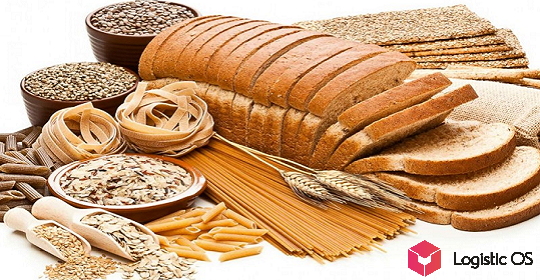
The strongest market response is emerging in pulses, an important source of plant protein for Indian consumers. Limited soil moisture in Maharashtra and Karnataka complicates the cultivation of chickpeas, lentils and peas during the winter rabi season. Amid uncertainty, importers seek to secure supplies in advance, while authorities tighten inventory oversight and impose storage restrictions.
In April–September 2026, India’s pulse imports increased by 59% in volume, with red lentil imports rising by 235%.
Limited rainfall also weakens the outlook for soybean and groundnut production, increasing reliance on imported vegetable oils. This creates opportunities for Russian sunflower and soybean oil suppliers, although outcomes depend on their price competitiveness against palm oil.
Indian processors can quickly adjust procurement according to relative feedstock prices, making global prices and logistics costs important alongside climate risks.
Rice, sugar and wheat face different market scenarios
Water shortages affect rice, sugarcane, maize, millet and cotton production. Forecasts suggest India’s rice output could decline from 154 to 147 million tonnes in 2026/27. A weaker production outlook increases the likelihood of tighter rice export regulation and continued restrictions on sugar exports.
Wheat warrants particular attention: planted area could shrink by 6%, from 33.6 to 31.58 million hectares. As of 13 November 2026, planting progress was 15.3% behind the previous year.
Alongside water shortages, growers’ decisions reflect the profitability of alternative crops, including chickpeas and rapeseed. A further risk is the forecast warm winter of 2026–2027: a 1°C temperature increase during grain filling could reduce wheat yields by 3–4%.
Smaller planted areas and potential yield losses increase the likelihood of changes to import policy, although large-scale overseas purchases remain uncertain.
Russian exporters strengthen their position in India
In April–September 2026, Russian pulse exports to India reached USD 95.35 million, exceeding the USD 81.15 million recorded in the previous full season. Export revenue over just 6 months was therefore 17.5% higher than the previous season’s total. Individual estimates put shipment growth at 59–73%.
Yellow peas and lentils remain promising products, with scope for further production growth in Russia. Expanding market presence requires attention to competition from Canada and Australia, seasonal demand, import duties and phytosanitary requirements.
Unlike pulses and vegetable oils, the outlook for Russian wheat exports remains largely scenario-dependent. If domestic harvest prospects deteriorate substantially, India could consider reducing import duties or arranging government procurement. This could provide Russia with an additional outlet for milling wheat, but guaranteed contract volumes should not be assumed.
Climate uncertainty reinforces the need for a long-term export strategy
Rebuilding India’s water resources and food reserves could take 1–2 agricultural seasons. The current situation may therefore offer both short-term shipment opportunities and a basis for lasting trade relationships.
Russian producers must also account for domestic climate risks. El Niño’s influence on Russia is predominantly indirect and varies across regions, interacting with atmospheric processes over the Atlantic and Arctic. Export planning should consequently focus on consistent product quality, diversified production and reliable supply chains rather than assuming favorable weather at home.
India could become an additional source of demand for Russian agriculture, but the decisive long-term advantage will be suppliers’ ability to adapt to changing consumption patterns and trade regulation.