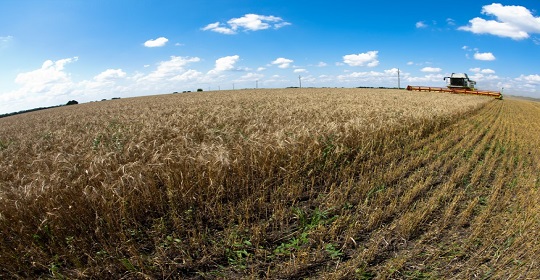
Currently, approximately 19% of crops in Russia are insured, but by 2030, this figure should increase to 30%, according to the Ministry of Agriculture.
Currently, it can be acknowledged that the popularity of agricultural insurance in Russia as a whole is growing.
For example, in 2025, farmers will have insured approximately 19% of all crops and up to 47% of their livestock.
However, this figure is still quite low, experts note. According to them, in 1930, 80% of all crops and 80% of livestock were insured. Risk is inseparable from farmers’ activities.
Therefore, those who understand this begin to practice sound risk management. Crop insurance is a key component of such management.
The current goal is, if not to reach Soviet levels, then at least to get closer to them. Experts believe that by 2030, up to 30% of crops in Russia will be insured.
While this represents a significant increase compared to today, it is still extremely insufficient. For this reason, experts believe the rate of growth of the share of insured land should be increased.
At the same time, agricultural insurance is a tool that is quite capable of working successfully, and it has already proven itself.
For example, from January to November 2025, Russian farmers received payments totaling 8.1 billion rubles from insurance companies. This includes over 6 billion rubles paid to crop growers whose crops were damaged by various adverse weather events.
Companies in the Krasnodar, Rostov, and Stavropol regions, which are more likely than others to experience droughts devastating their crops, are receiving payments.
Meanwhile, livestock farmers saw record-low payouts for 2025, totaling approximately 700 million rubles. However, this could mean a low number of insurance claims, which in itself is a positive for farmers.
At the same time, experts note that agricultural producers are increasingly choosing comprehensive insurance programs that cover a wide range of risks. This is due to the fact that climate change is increasingly causing adverse weather events in areas previously uncharacterized by them.
Therefore, insurance is practically the only way for agricultural producers to reduce their losses.
For this reason, there is reason to believe that the demand for this tool will grow in the future.