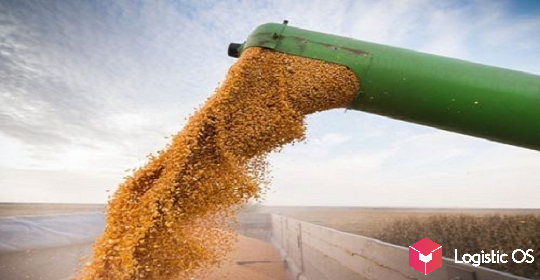
The State Duma will consider a bill that will require agricultural producers to sell a portion of their produce on organized trading platforms.
The bill’s authors note that, if adopted, it will achieve several priority goals.
First, the new provisions will facilitate fair and competitive pricing based on a realistic balance of supply and demand, a process significantly facilitated by exchange trading.
Second, if implemented, the government will likely ensure equal and non-discriminatory access to goods for all participants.
Furthermore, it is planned to reduce the risk of price manipulation and create national price indicators.
All of this, experts say, should significantly increase the transparency of agricultural product purchases and sales within the country.
However, only a portion of agricultural products produced in Russia will be sold on the exchange.
The Cabinet of Ministers will likely determine the standards for listing goods on the exchange; the bill grants it this authority. It is expected that this body will be required to consider several factors when setting standards.
For example, production volume, as well as export and domestic supplies. However, the authors of the initiative emphasize that, in any case, the standard cannot exceed 25% of the total production volume of a given product in a given region.
At the same time, if a manufacturer voluntarily wishes to sell a significant portion of its output on the exchange, it retains this right.
Of particular interest is the list of products that will be required to be offered for exchange trading.
These include, for example, frozen fish, shellfish, wheat, rye, barley, corn, soybeans, sunflower and rapeseed seeds, sugar beets, sunflower oil, white sugar, as well as soybean and sunflower meal.
If the bill is passed by the State Duma, it is expected to come into force as early as September 1 of this year.
At the same time, some companies criticize this law, for example, because the exchange doesn’t shorten the path from producer to consumer, but merely acts as an additional intermediary.
This could result in additional costs for selling their products in this way, which, in turn, could mean higher prices for consumers.