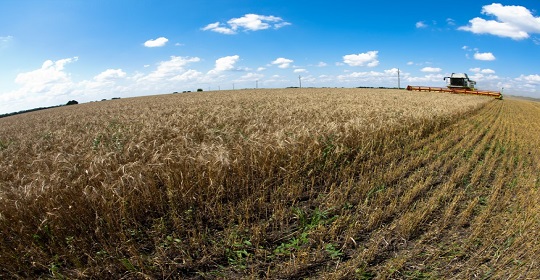
The US Department of Agriculture (USDA) forecasts that the current season’s wheat harvest will fall from 90 million tons to 86 million tons.
According to the USDA’s expectations, Russia’s wheat harvest this season could fall by approximately 4 million tons. However, experts emphasize that even this figure represents a very good result.
The 4 million tons figure isn’t a sharp decline; it’s more of a slight fluctuation, which occurs when the overall wheat harvest has been at a very respectable level for several years in a row.
It’s emphasized that the USDA’s forecast doesn’t include Crimea and Russia’s new regions. If these regions were included, the final harvest could be even higher.
At the same time, Russia’s corn harvest is expected to increase from 15 million tons to 16 million tons.
As for Russia’s export potential, experts are confident that it will maintain its leadership in wheat exports. Moreover, it’s possible that exports will even increase slightly, from 46 to 47 million tons.
By comparison, the EU will likely be able to ship approximately 31 million tonnes to foreign markets next season – virtually the same amount as this season.
Thus, it can be concluded that Russia, the world’s leading wheat supplier, is increasing its shipments, while Europe is lagging significantly behind, with virtually no growth.
At the same time, analysts predict that the world as a whole may experience a decline in wheat production this season.
The global harvest is projected at only 819 million tonnes, a significant decline from the current season’s 843 million tonnes.
Consequently, total global exports could decline from 223 million tonnes to 212 million tonnes. Carry-over stocks will fall by 4 million tonnes.
Russian experts generally agree with their US colleagues and estimate the export potential of Russian wheat next season at 45 million tonnes.
At the same time, Russian experts are gradually lowering their export forecasts. This is not due to harvest prospects, but to other factors, the most important of which are the extremely strong ruble, which limits exporters’ profits, as well as low global wheat prices and insufficient demand.
There is every reason to believe that these factors combined could significantly reduce Russian wheat exports even if the harvested crop is sufficiently high, experts warn.