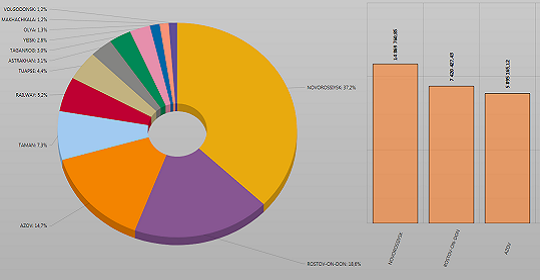
The domestic grain market is demonstrating a high degree of adaptability amidst significant infrastructure changes.
By the end of the first month of autumn, export volumes of the primary grain crop had surpassed the 2.4-million-tonne mark. Total exports of all grain crops for the same period exceeded 3.2 million tonnes.
Agricultural analysts note that this emerging trend is likely to continue. Provided weather conditions remain favorable during the second month of autumn, wheat shipment volumes could see further growth and exceed the 2.5-million-tonne threshold.
Nevertheless, current figures remain well below the record highs seen in previous years.
Experts attribute this decline primarily to the forced suspension and significant slowdown of operations at key port terminals in the Azov-Black Sea basin.
This infrastructure issue has resulted in total shipments for the summer-autumn period ranging from 6.5 to 8.5 million tonnes, depending on the calculation methodologies used by various industry analysis centers.
The most conservative estimates indicate a several-fold drop in shipment rates compared to similar periods in past seasons, pushing current figures to their lowest levels in a decade.
Infrastructure Challenges and Seasonal Forecasts
Capacity constraints at traditional southern maritime gateways are prompting specialists to revise their annual forecasts downward. Under pessimistic scenarios, if operations at the major deep-water terminals in the Black and Azov Seas do not return to normal, full-capacity levels, total exports of all grain types for the current agricultural year could fall to 40 million tonnes.
Analysts anticipate that total wheat shipments will amount to just over 36 million tonnes—roughly one-fifth lower than last year’s volumes and the lowest figure seen in several years.
Forecasts have been lowered because experts no longer factor a rapid return to previous vessel traffic levels in southern waters into their models.
Although major terminals in Novorossiysk and Tuapse remain operational, they are currently running at reduced capacity.
At the same time, market participants are actively developing alternative logistics corridors. However, overland routes and new port options are not yet capable of fully offsetting the lost volumes.
These additional logistics channels add only hundreds of thousands of tonnes of capacity per month, whereas losses in the southern sector run into the millions of tonnes, necessitating the continued search for comprehensive infrastructure solutions.